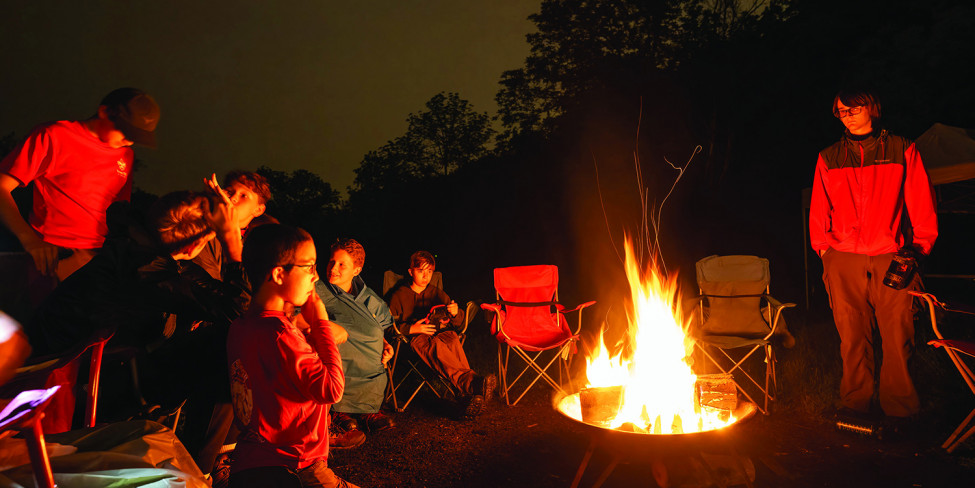
Campfire Safety
Gather ‘Round — Safely
Few moments in Scouting capture the magic of the outdoors quite like sitting around a campfire. The glow of the flames, the laughter of Scouts sharing stories, and the quiet reflection that follows a day of adventure all create memories that last a lifetime. Yet, with that warmth and tradition comes responsibility.
Each year, campfire-related incidents remind us that even small fires can cause serious injuries or property damage when proper safety steps aren’t followed. October’s focus on Campfire Safety is a timely reminder for every Scout, leader, and parent: a safe campfire isn’t about limiting fun — it’s about protecting people, property, and the wilderness we call home.
This month, as units across the country enjoy crisp evenings and fall adventures, let’s reinforce best practices and stay aligned with Scouting America’s safety policies regarding fire building, additives, and environmental responsibility.
Key Principles of Campfire Safety
Site Selection
- Use established fire rings or designated areas whenever possible.
- Keep fires at least 10 feet from tents, trees, and other combustible materials.
- Clear the area of dry leaves, pine needles, and debris before lighting the fire.
Fire Size & Control
- Keep fires appropriately sized and manageable — no larger than necessary for cooking or warmth.
- Always maintain a water source and a shovel nearby to control or extinguish the fire.
- Never leave a campfire unattended.
Extinguishing Fires
- Drown the fire with water, stir the ashes, and repeat until cold to the touch.
- Do not bury coals — buried embers can smolder and reignite later.
Policy Reminder
Prohibited Use of Accelerants and Additives
Scouting America’s policy strictly prohibits the use of chemical additives or accelerants to start or enhance campfires. This includes gasoline, diesel, lighter fluid, kerosene, oil-based fuels, and aerosol-based starters.
From the Guide to Safe Scouting:
“Using liquid fuels for starting any type of fire—including lighting damp wood, charcoal, and ceremonial campfires or displays—is prohibited.”
These substances present extreme fire hazards and can result in serious burns, explosions, and environmental contamination.
Teaching Moment for Scouts
Consider incorporating a “Fire Safety Challenge” into your next troop or pack meeting:
- Demonstrate how to safely build and extinguish a fire.
- Review the Campfire Safety Checklist together.
- Discuss how improper use of additives can cause injury or damage.
- End with a reflection on how fire brings people together when used responsibly.
A campfire is more than a source of heat — it’s a symbol of community, tradition, and the enduring spirit of Scouting. Every spark represents curiosity and adventure, and every ember reminds us of our duty to protect what we’ve been given.
By practicing safe and responsible fire-building, we ensure that the next generation of Scouts experiences the same warmth, laughter, and light — without the risk of harm. Let’s continue to model the Scouting SAFE principles — Supervision, Assessment, Fitness, and Equipment — to keep every campfire moment both memorable and safe.
Resources:

reach out